Frequently Asked Questions
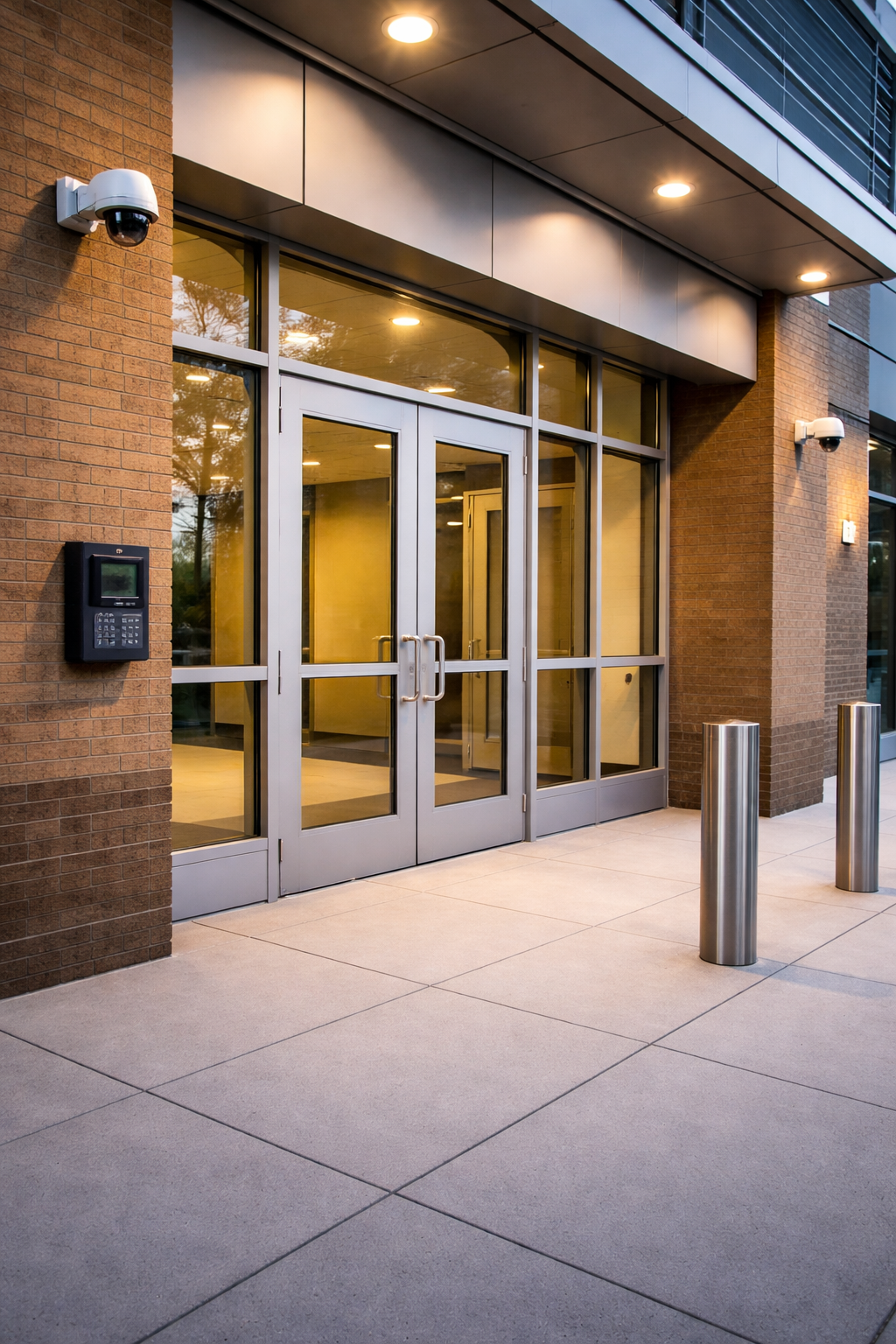
What is a physical security assessment?
A physical security inspection and resulting assessment evaluate your current security posture by identifying vulnerabilities, highlighting existing strengths, and helping clarify priorities for improvement. This is in the context of executive protection, employee protection, and the protection of facilities.
Why is an assessment important?
An assessment will identify areas you should sustain and areas you should improve. An example: Your MDF and IDF communications rooms. Frequently the heat generated in these rooms causes equipment to overheat and malfunction. The doors are propped open to vent heat, but this is an attack vector that is capable of bringing down your operations for days or weeks. Another example: Do your executives have a duress system where they can discreetly activate a device that will summon help immediately? These were just two examples. There are 238 more! You have unknown unknowns. I can help you discover them.
Do you inspect for occupational safety and health items?
No. Items such as trip-and-fall hazards, proper storage of HAZMAT materials, confined space procedures, etc., are outside the scope of physical security.
How do you determine the final score of the assessment?
The assessment uses a structured checklist and scoring rubric covering 240 measurable items across 16 domains. Each item is weighted by priority from 1 to 4 based on its relative importance to security. The scoring model produces a final score on a scale from 0 to 640.
Who is the assessment for?
A physical security assessment can benefit any organization that wants a clearer understanding of its current security posture, its vulnerabilities, and its opportunities for improvement.
Is the assessment the same for every organization?
No. The scope is adjusted to fit the size, complexity, and needs of the organization. A small local business will not have the same requirements as a larger organization with more extensive governance, risk, and compliance expectations.
What does the assessment include?
Depending on scope, the assessment may include document review, site observation, selected testing of systems or controls, interviews with key personnel, and a final findings report.
Do you provide recommendations for improvement?
Yes. Deficiencies and notable gaps are accompanied by recommendations for improvement.
Do you sell or install products?
No. Sentinel Physical Security Assessments, LLC, is independent. It does not sell products or installation services, so recommendations are based on site conditions, operational realities, and client priorities rather than product sales.
How long does the assessment take?
Timing depends on site size, document volume, and assessment scope. In many cases, the on-site portion can be completed in one business day, with additional time needed for document review, scoring, analysis, and final reporting.
What will the client receive at the end?
Clients receive a comprehensive assessment that summarizes findings, identifies vulnerabilities and strengths, and includes recommendations for improvement.
How does pricing work?
Pricing depends on site size, document-review burden, interview scope, travel, and reporting depth. Smaller local assessments cost less than larger or more compliance-intensive engagements.
Is the assessment confidential?
Yes. Assessment information and findings are treated as confidential and are shared only with the client unless otherwise authorized.
How is payment handled?
Payment terms are typically 50% in advance and 50% upon completion. Travel-related expenses, when applicable, can be handled separately at cost.
What is your availability?
Availability depends on current scheduling and project scope. Please use the contact page to discuss timing and availability.
Are you insured?
Yes. Sentinel carries General Liability and Professional Liability insurance.
I’m interested, but I need to do this as inexpensively as possible. How can you assist?
For businesses, the largest portion of the cost is GRC document review. Most large companies have a binder(s), whether the old-fashioned 3-ring type or a collection of policies in a Windows folder. Governance policy review is time consuming. If you want to exclude policy review, we can concentrate on the core essentials of physical security, saving you a good deal of money in the process. For hospitals and schools, Governance is elemental to the overall physical security framework and cannot be excluded.